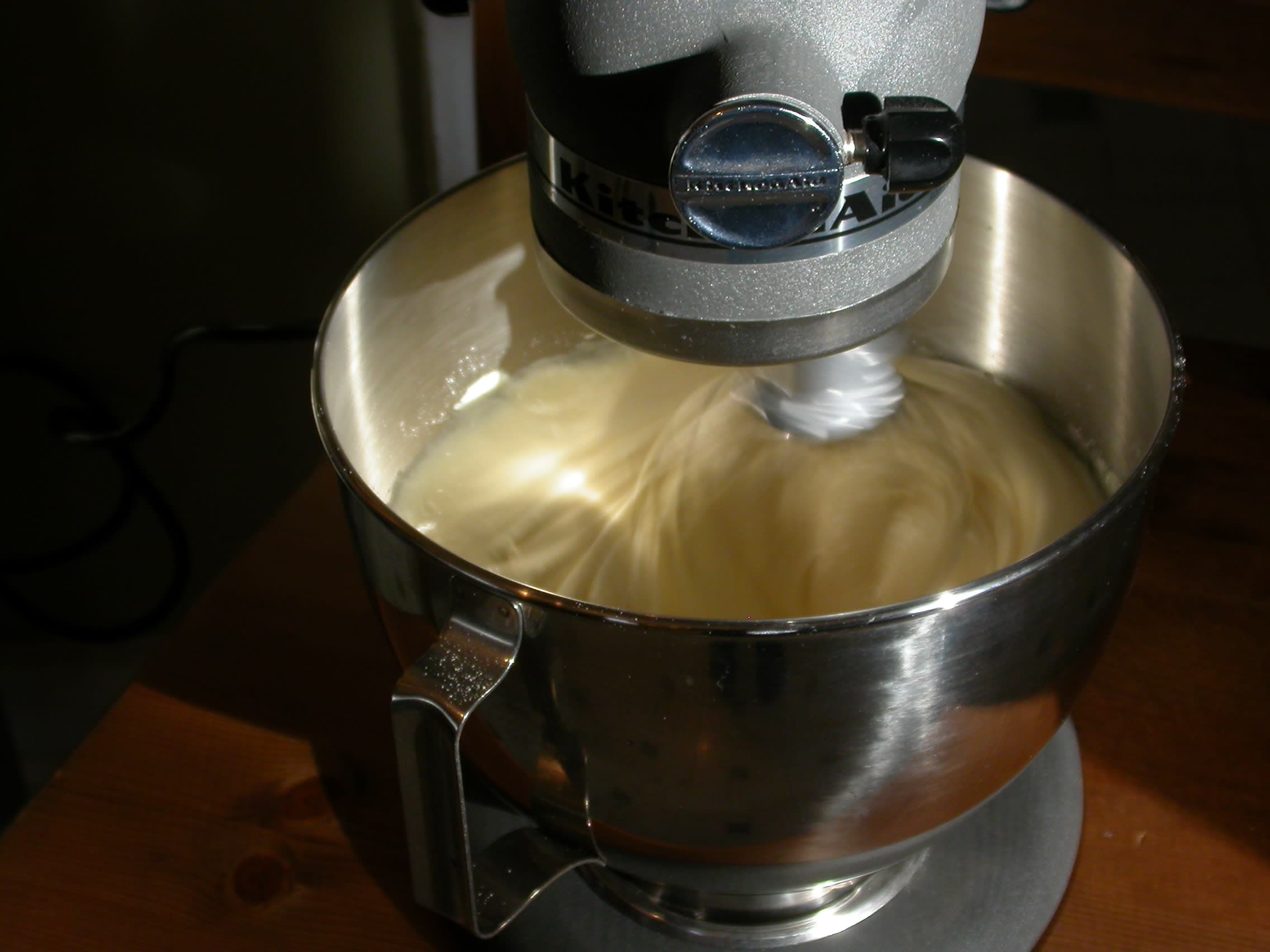
A good stand mixer changes what you're willing to attempt in the kitchen — bread dough, stiff buttercream, and whipped egg whites all get dramatically easier. It's also one of the rare small appliances that can last decades, so it's worth getting the size and power right the first time.
What separates a great mixer from a mediocre one
- Bowl size — 4.5–5 qt covers most home baking; 6–7 qt matters if you bake in bulk or make bread often
- Wattage — more matters for dense bread doughs, less so for cakes and frosting
- Attachment compatibility — pasta rollers, meat grinders, and ice cream attachments only matter if the ecosystem supports them
- Tilt-head vs bowl-lift — tilt-head is easier for smaller batches; bowl-lift handles heavier loads more stably
Top picks
Best overall — KitchenAid Artisan
The default recommendation for a reason: broad attachment ecosystem, proven durability, and a 5-quart bowl that covers nearly everything a home baker needs.
Check price on AmazonBest budget under $100 — Aucma Stand Mixer
A tilt-head design that covers the basics — cakes, cookies, light bread dough — at a fraction of the premium-brand price.
Check price on AmazonBest under $200 — Cuisinart Precision Master
A capable step-up with a stainless bowl and solid motor power, sitting well below KitchenAid's price without a major performance gap for typical home baking.
Check price on AmazonBest for bread dough (high wattage) — KitchenAid Professional 600
Higher wattage and a bowl-lift design built to handle dense, heavy dough without straining the motor.
Check price on AmazonBest KitchenAid alternative — Cuisinart SM-50
A genuine competitor on power and attachment compatibility, often at a friendlier price point.
Check price on AmazonBest for small kitchens — KitchenAid Mini
The same core mechanism in a lighter, smaller-footprint body, at the cost of some bowl capacity.
Check price on AmazonBest professional-grade — KitchenAid Commercial Series
Built for higher-volume, frequent baking rather than occasional home use, with the durability to match.
Check price on AmazonBuying guide
- Bowl size — 4.5 qt for occasional baking, 5–6 qt for regular use, 7 qt for large batches or bread
- Wattage — 300W is fine for cakes and frosting; 400W+ is worth it for regular bread baking
- Attachments — check compatibility before assuming a pasta roller or grinder will fit
- Speed settings — more settings give finer control, especially at the low end for folding in delicate ingredients
- Noise — varies more by motor design than by brand tier
KitchenAid vs everything else
KitchenAid's premium comes from its attachment ecosystem and long track record of durability — genuinely worth it if you plan to use attachments over the years. If you just want a mixer that mixes well, several alternatives above get you 90% of the performance for meaningfully less money.
FAQs
How long do stand mixers last? A well-maintained mixer, especially from an established brand, commonly lasts a decade or more.
Can a stand mixer replace a hand mixer? Yes, and it does more — hand mixers can't handle heavy dough the way a stand mixer can.
What wattage do I need for bread dough? Look for at least 350–400W if you bake bread regularly; lighter mixers can struggle with stiff dough over time.
Are KitchenAid attachments worth it? If you'll actually use them (pasta, grinding, ice cream), yes — they're a meaningful part of why the brand commands a premium.
Bottom line
The KitchenAid Artisan remains the safest all-around pick for most home bakers. If budget is the deciding factor, the Aucma or Cuisinart Precision Master get you most of the way there for significantly less.